PRP and GFC are not interchangeable labels for the same injection, and neither is suitable for every type of hair loss. You will be able to compare their preparation, identify the diagnoses that fit, understand the treatment course, and question a clinic about evidence, safety and total follow-up before choosing.
Key takeaways
- Confirm the hair-loss diagnosis before choosing PRP or GFC.
- PRP uses platelet-rich plasma; GFC uses concentrated growth factors.
- Ask about preparation, injection technique, session count and expected timeline.
- Choose a Nashik clinic offering diagnosis, consent and treatment follow-up.
Which hair-loss diagnoses should be assessed before PRP or GFC?
PRP or GFC is most relevant when a diagnosis shows living, miniaturised follicles that could respond; injections are not a default treatment for every type of shedding.
| Diagnosis | What the pattern suggests | Priority before injections |
|---|---|---|
| Androgenetic or female-pattern hair loss | Gradual thinning with miniaturised follicles | Confirm with scalp examination and dermoscopy; discuss established treatments |
| Early traction alopecia | Hair loss where tight hairstyles or extensions pull repeatedly | Remove the pulling force immediately; assess whether follicles remain viable |
| Selected non-scarring alopecia areata | Discrete or patchy smooth bald areas | Confirm the diagnosis and disease activity with a dermatologist before choosing injections |
| Telogen effluvium | Diffuse shedding beginning about two to three months after fever, illness, surgery, childbirth, rapid weight loss or severe stress | Correct the trigger or identified deficiency first; do not automatically choose PRP or GFC |
The consultation should include medication review, family history, and menstrual or hormonal history when relevant. Order a complete blood count, ferritin, thyroid-stimulating hormone, vitamin B12 or vitamin D when symptoms and examination support those tests, rather than using the same panel for everyone.
Scalp pain, burning, pustules, heavy scale, shiny skin or missing follicular openings requires prompt investigation for inflammatory or scarring alopecia. Delaying anti-inflammatory treatment while pursuing injections can cause permanent follicle loss, and a scalp biopsy may be necessary. Diagnosis first, injection second: that is the safer basis for hair fall treatment in Nashik.
PRP versus GFC: what is injected, and how are they prepared?
PRP and GFC are not interchangeable injections. PRP is prepared by drawing your blood, centrifuging it, and concentrating platelets within plasma. GFC means growth factor concentrate, but the name does not identify one internationally standardised preparation.
| Option | What is injected | How preparation can differ |
|---|---|---|
| PRP | Platelet-rich plasma containing platelets, plasma and, depending on the method, leukocytes | Single-spin or double-spin centrifugation, platelet concentration, leukocyte content, activation method, injection depth and session number |
| GFC | A blood-derived concentrate defined by the clinic’s processing system | Blood fraction selected, kit or validated protocol, separation steps, activation and the growth factors retained |
Ask which blood fraction is used, the exact kit or validated protocol, whether activation is performed, and what published evidence supports that specific method. These questions matter when comparing PRP treatment in Nashik with GFC treatment in Nashik because two clinics can use the same label for different preparations.
Both approaches rely on signalling molecules released by platelets and other blood components. Those signals may influence follicular cells, blood-vessel formation and the hair-growth cycle, but a plausible biological mechanism does not prove that one preparation is superior.
PRP studies in pattern hair loss suggest possible gains in hair density or thickness. Small trials, different processing methods, injection techniques and session schedules make results difficult to compare, so neither treatment guarantees regrowth. The same evidence caution applies to GFC.
What happens during a PRP or GFC appointment?
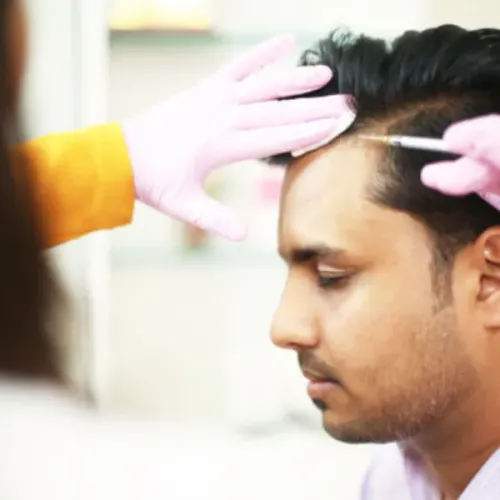
Plan roughly 30–60 minutes for a PRP or GFC appointment. After consent, the clinician reviews your medicines, health conditions and bleeding risks, then collects blood from your arm. PRP is processed in a centrifuge; GFC uses a designated preparation system.
The scalp is cleansed and treated with antiseptic before injections are distributed across thinning areas, not only the most visible bald spot. Ask the clinician to explain the injection depth, spacing and treatment area. Topical anaesthetic cream, local anaesthetic or cooling may reduce discomfort, depending on the protocol.
| Feature | PRP | GFC |
|---|---|---|
| Blood draw | Required; blood is centrifuged | Usually required; blood goes through a designated system |
| Needle discomfort | Brief stinging, followed by tenderness | Brief stinging, followed by tenderness |
| Bruising and swelling | Possible for a few days | Possible for a few days |
| Downtime | Usually minimal; avoid vigorous scalp rubbing | Usually minimal; follow the clinic’s instructions |
| Repeat sessions | Often planned as a course | Often planned as a course |
Both procedures use your own blood, but autologous does not mean risk-free. Disclose active scalp infection, platelet disorders, anticoagulant use or other significant illness. Bleeding, fainting, infection, swelling and pain require a safety plan.
- Keep the scalp clean as instructed.
- Report increasing redness, pus, fever or severe pain.
- Ask whether processing, anaesthesia, aftercare and review are included in the quoted appointment price, including for GFC treatment in Nashik.
What results, treatment course and alternatives should you compare?
PRP or GFC cannot guarantee a cure or recreate a completely bald, smooth area. They are more relevant when viable follicles remain, with realistic targets such as reduced shedding or thicker miniaturised hairs. Those outcomes differ from restoring long-standing bald skin.
| Option | What it may change | Key limitation or condition |
|---|---|---|
| PRP | Density or thickness in pattern hair loss | Evidence is mixed; protocols vary |
| GFC | Signalling support for remaining follicles | Preparations are not internationally standardised |
| Topical minoxidil | Supports growth and reduces loss | Requires continued use |
| Oral minoxidil | May support growth when medically suitable | Needs medical screening and monitoring |
| Finasteride or dutasteride | Targets androgen-driven loss | Individual assessment; pregnancy precautions apply |
| Anti-dandruff treatment | Controls scalp disease and inflammation | Does not replace treatment for follicle loss |
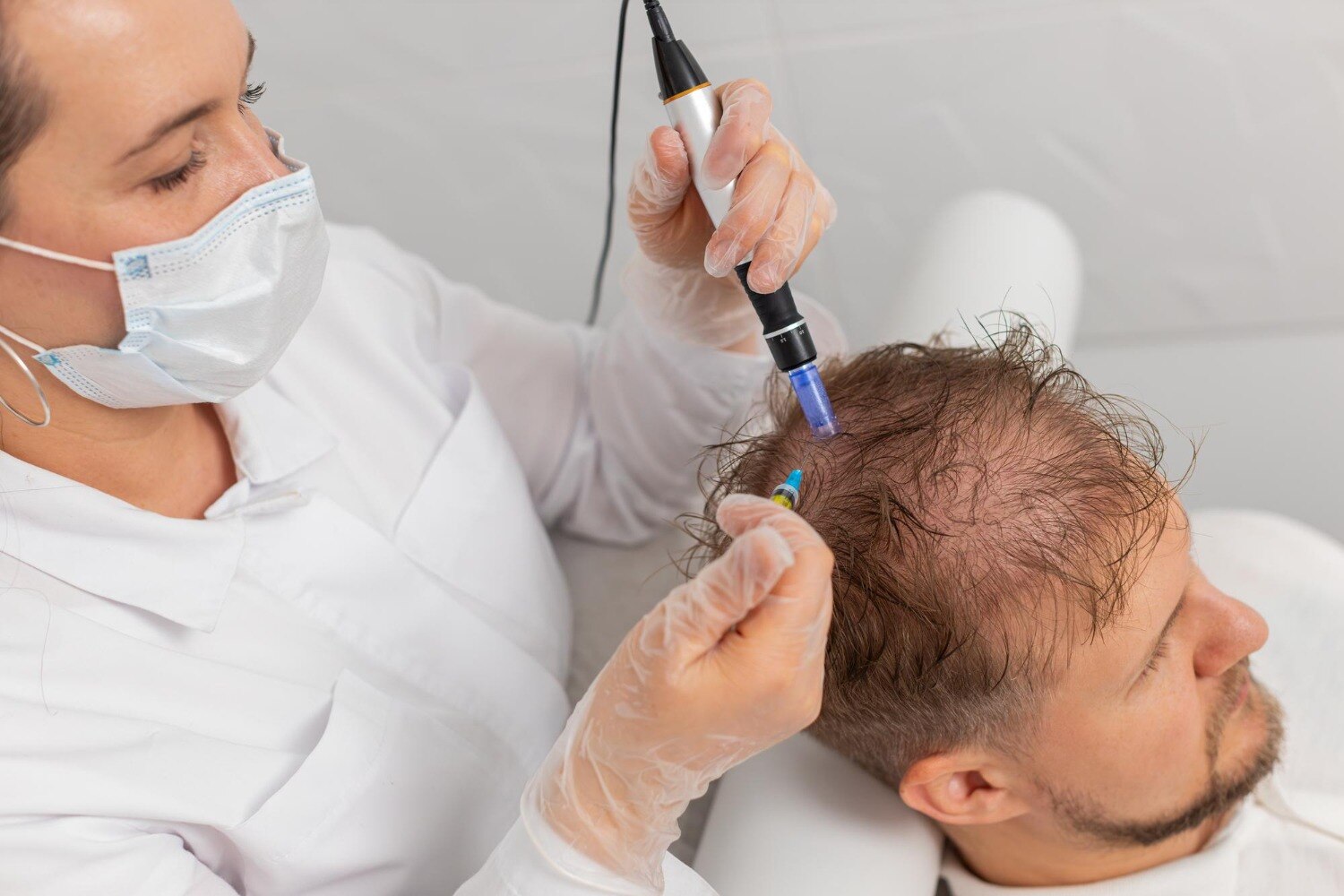
| Low-level light therapy or microneedling | May support selected cases | Results depend on diagnosis and consistent use |
| Hair transplantation | Moves follicles into suitable bald areas | Requires adequate donor hair and ongoing management |
Judge change with baseline and follow-up photographs using the same angle, distance, lighting, hairstyle and hair parting. Daily shed counts fluctuate and can mislead; hair cycles require assessment after several months, not a few weeks.
Before booking hair fall treatment in Nashik, request a written plan stating:
- The number and spacing of sessions
- The reassessment date and possible maintenance appointments
- The total expected cost
- The objective stopping point if photographs show no improvement
A dermatologist should explain why an injection is being added, substituted or rejected. PRP treatment in Nashik and GFC treatment in Nashik are procedure searches, not proof that either suits your diagnosis.
How should you choose a skin clinic in Nashik for PRP or GFC hair treatment?
Before booking, require a written diagnosis, scalp examination or dermoscopic findings, and a reason PRP or GFC fits that diagnosis. A search for PRP treatment in Nashik is not evidence that injections suit your cause of hair loss.
Ask the skin clinic in Nashik for:
- The blood fraction, preparation method, processing device or kit, activation step, injection pattern and anaesthetic plan.
- Confirmation that blood-collection and injection supplies are sterile and single-use, with documented consent, patient identification and sharps disposal.
- The proposed number of sessions, interval between them, date for standardised photographs, expected maintenance and the plan if improvement is not measurable.
- A written quote separating the procedure, processing, anaesthesia, medicines and follow-up, including which review appointments each package covers.
A package is not a promise of regrowth.
| Option | What differs | What to ask |
|---|---|---|
| PRP | Platelet concentrate prepared from your blood; spin method, platelet and leukocyte content can vary | Which protocol, activation method and evidence support this preparation? |
| GFC | “Growth factor concentrate” has no single international preparation standard | Which fraction and kit are used, and what published evidence supports that exact method? |
| Either | Autologous does not mean risk-free | How are bleeding, fainting, infection and poor response managed? |
Dr. Shreeya: Consultant Dermatologist can be compared with other local providers using these questions. Choose the documented diagnosis, transparent protocol, realistic endpoint, safety process and follow-up plan—not simply a clinic name or the label GFC.
Frequently asked questions
Which hair-loss diagnoses should be assessed before PRP or GFC?
A dermatologist should assess whether you have androgenetic alopecia, alopecia areata, telogen effluvium, scarring alopecia or another cause. PRP or GFC is most relevant when living, miniaturised follicles remain responsive.
What is the difference between PRP and GFC for hair loss?
PRP is prepared by processing your blood to concentrate platelets in plasma. GFC is prepared to collect concentrated growth factors from a blood sample. Ask the clinic to explain its preparation method, equipment and injection plan.
What happens during a PRP or GFC hair-treatment appointment?
The appointment usually includes scalp examination, diagnosis, consent, blood collection, sample processing and scalp injections. The clinician should explain aftercare, possible discomfort and when follow-up will occur.
How should you choose a skin clinic in Nashik for PRP or GFC hair treatment?
Choose a skin clinic in Nashik that diagnoses the cause of hair loss before injections, discusses alternatives, explains the full treatment course and provides follow-up. Ask who performs the procedure and what results are realistic.
Keywords