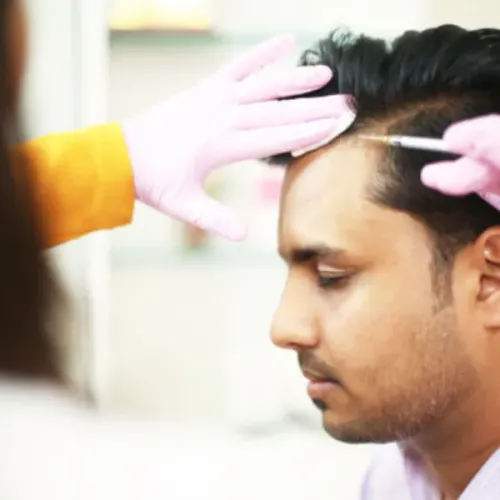
Hair loss treatment starts with identifying the pattern, timing and cause of hair change rather than choosing a procedure immediately. By the end of the consultation, you should know what examination and tests are needed, which treatments fit the diagnosis, and how progress will be measured over time.
Key takeaways
- Bring a timeline of shedding, illness, stress, medicines and family hair-loss history.
- A hair-pull test and scalp examination help distinguish shedding from pattern thinning.
- Blood tests are used when symptoms or examination findings suggest an underlying cause.
- Follow-up compares shedding, scalp changes and photographs before altering treatment.
What to record before your first hair-loss appointment
Bring a clear timeline, not just the statement “my hair is falling.” The pattern and events before it began help a dermatologist separate excessive shedding from pattern thinning, patchy alopecia or scalp disease.
1. Record when you first noticed the change, whether it started suddenly or gradually, and whether it is worsening. Note the affected areas: hairline, crown, parting, temples, eyebrows or distinct bald patches.
2. Write down recent triggers from the previous three to six months, including fever or infection, surgery, childbirth, major stress, rapid weight loss, restrictive dieting and new exercise routines.
3. List every medicine and supplement, including recent changes, and mention thyroid disease, anemia, autoimmune illness, menstrual irregularity, pregnancy, diabetes and previous hair-loss episodes.
4. Note family history of receding hairlines, crown thinning, female-pattern thinning or patchy baldness. Record how often you wash your hair and any tight hairstyles, extensions, chemical treatments, heat styling or recent haircut.
5. Describe scalp symptoms precisely: itching, pain, burning, tenderness, redness, heavy scale, pus or crusting. Eyebrow loss and smooth, shiny skin where follicles disappeared need prompt attention because scarring can permanently destroy follicles.
Take dated photographs in consistent lighting with your hair dry, parted in the same places and free of styling products. Bring previous test reports and treatment details, including names, doses, duration and the reason you stopped.
If you are comparing hair loss treatment in nashik clinics, choose one that records baseline photographs or dermoscopic findings before treatment.
How the dermatologist distinguishes shedding from hair loss
The examination separates excessive shedding from true loss by checking whether follicles are releasing hairs or becoming fewer, smaller, or permanently damaged. The dermatologist inspects the scalp for density, redness, scale, inflammation, pain, pus, broken hairs, scarring and visible follicular openings.
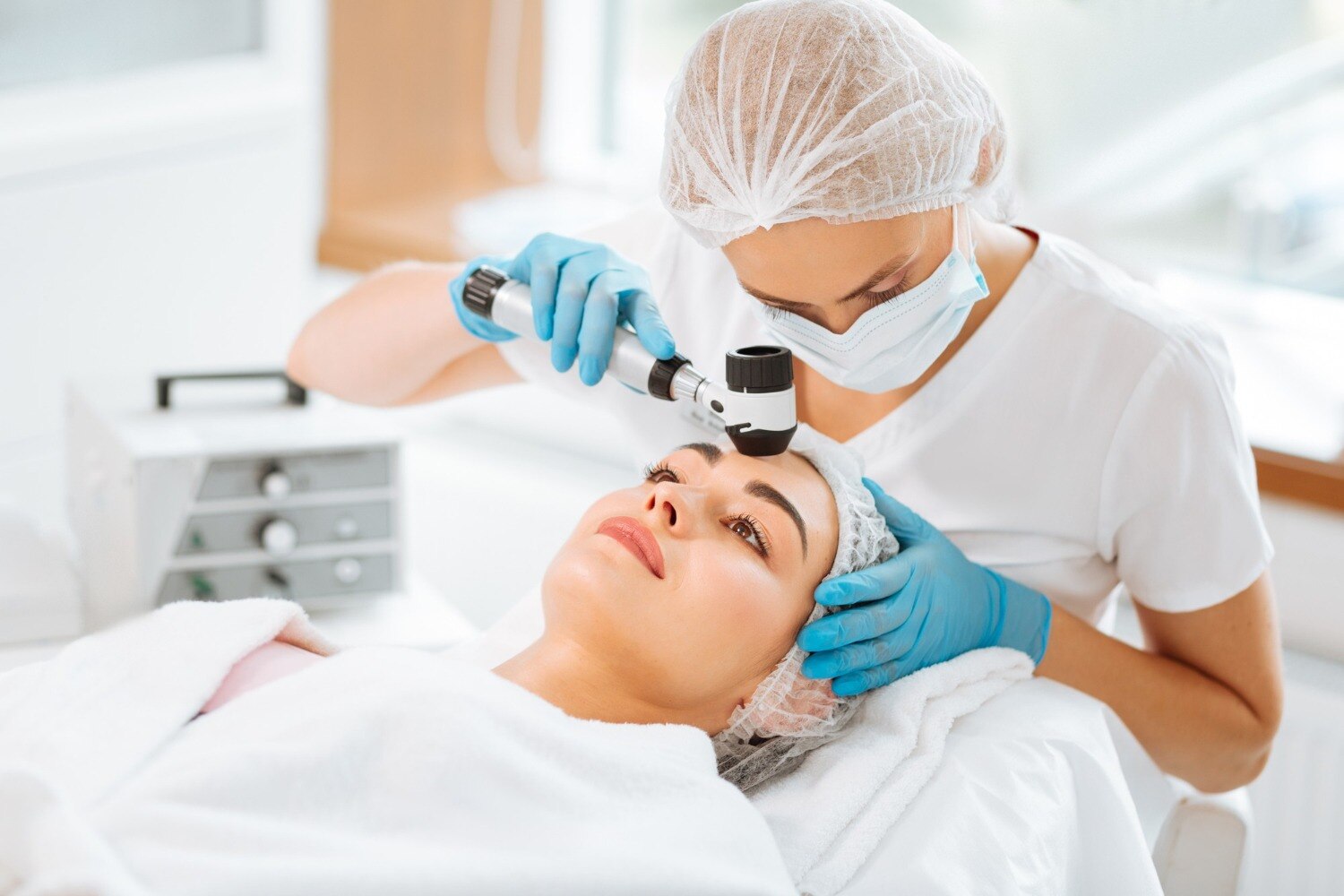
A gentle hair-pull test may show active shedding: several hairs coming away from different scalp areas suggests increased release of resting hairs. The clinician also examines hair shafts for breakage and uses a dermatoscope to view follicle openings and miniaturised hairs. Standardised photographs provide a baseline for comparing density later.
A hair specialist doctor in Nashik identifies the pattern by mapping where thinning occurs, rather than judging only the number of hairs in your brush:
- Diffuse shedding: reduced volume across the scalp, often with preserved follicle openings and no sharply bald area.
- Pattern hair loss: gradual recession at the temples, thinning at the crown, or widening of the central part, with progressively finer hairs.
- Alopecia areata: smooth, sharply defined round or oval patches, sometimes with eyebrow loss or nail changes.
- Traction loss: thinning along tight ponytail, braid or extension lines, with short broken hairs around the margins.
- Scarring alopecia: shiny skin, absent follicular openings, redness, scale, burning or tenderness; destroyed follicles cannot regrow hair.
Rapidly expanding patches, pus, marked pain or scarring require prompt assessment because waiting can make permanent loss more extensive.
When blood tests and further investigations are needed
Blood tests are needed when the pattern or history points to an internal cause rather than simple pattern thinning. A dermatologist may order a complete blood count and serum ferritin for anaemia or low iron, thyroid-stimulating hormone for thyroid disease, and vitamin B12 or vitamin D tests when diet, symptoms or examination support deficiency.
- Diffuse shedding beginning two to three months after fever, surgery, rapid weight loss, severe stress or a new medicine may be telogen effluvium; tests look for a correctable trigger.
- Irregular periods, acne, increased facial hair or sudden crown thinning may prompt testosterone, DHEAS or prolactin testing for hormonal conditions such as PCOS.
- Scaling, broken hairs, pus or tender areas may require a potassium hydroxide examination, fungal culture or bacterial testing for scalp infection.
- Pain, burning, eyebrow loss, shiny skin, missing follicular openings or rapidly expanding patches calls for prompt dermoscopy and sometimes a scalp biopsy. Scarring alopecia can permanently destroy follicles.
Patterned thinning with miniaturised hairs often needs no extensive blood panel, while sharply defined patches may indicate alopecia areata and require a different plan.
| Finding | Investigation | Why diagnosis changes care |
|---|---|---|
| Patterned thinning | Scalp examination and dermoscopy | Separates androgenetic alopecia from shedding |
| Diffuse shedding | Blood tests guided by history | Finds anaemia, thyroid or nutritional triggers |
| Patches or scarring signs | Dermoscopy, infection tests or biopsy | Prevents delayed treatment of alopecia areata, infection or scarring |
“Best skin specialist in Nashik” is not a medical ranking. Choose a registered dermatologist with recognised dermatology training who explains the hair loss treatment process rather than selling a generic hair-fall package.
How your dermatologist chooses medicines, procedures or referral
The diagnosis determines whether you need medicine, a procedure, infection treatment or urgent referral. A “best skin specialist in Nashik” is not a formal ranking; check that the dermatologist is registered with the National Medical Commission and has recognised dermatology training.
| Condition | Usual findings | Treatment direction |
|---|---|---|
| Pattern hair loss | Gradual patterned thinning and miniaturised hairs | Regular topical minoxidil; selected patients may receive other prescription medicines. Low-level light devices are adjuncts, need repeated use and have variable evidence. |
| Telogen effluvium | Diffuse shedding beginning two to three months after illness, stress, weight loss or another trigger | Find and correct the trigger, review medicines and nutrition, then monitor regrowth. Procedures are not the starting point. |
| Alopecia areata | Sharply defined smooth patches, sometimes eyebrow loss | Anti-inflammatory treatment such as prescribed corticosteroids; extensive or rapidly spreading disease may need systemic treatment or specialist referral. |
| Scalp infection | Scale, redness, broken hairs, pus or tenderness | Fungal testing and prescription antifungal treatment; avoid steroid-only treatment until infection is excluded. |
| Traction alopecia | Hairline loss matching tight hairstyles or extensions | Stop traction immediately and treat inflammation. Persistent loss needs assessment for permanent follicle damage. |
| Scarring alopecia | Pain, burning, marked scale or missing follicular openings | Prompt specialist evaluation, often including dermoscopy or biopsy, because inflammation can permanently destroy follicles. |
For hair loss treatment in Nashik, Dr. Shreeya: Consultant Dermatologist can help distinguish a condition needing medical treatment from one where a procedure would waste time. Ask for a review plan and objective comparison; rapidly expanding patches, pus, pain or scarring should not wait.
Related services
Clinic Dermatology Hair Loss Management And Treatment Hair Loss Management And Treatment View service → |
Cosmetic Dermatology (Aesthetic Medicine) PRP and GFC for Hair Fall Treatment PRP and GFC for Hair Fall Treatment View service → |
What follow-up reveals about whether treatment is working
Assess a treatment after its biological timetable, not after a few days. Minoxidil commonly needs at least 3 to 6 months, while finasteride for male pattern hair loss is usually reviewed around 6 to 12 months. Telogen effluvium can take several months to settle after its trigger is corrected.
Continue only as prescribed; stopping early can make an effective plan look unsuccessful.
During follow-up, discuss:
- Minoxidil: report persistent scalp irritation, dizziness, palpitations or unwanted facial hair.
- Finasteride: discuss sexual symptoms, breast changes or mood changes promptly. It is not used in pregnancy, and anyone pregnant or able to become pregnant must not handle crushed or broken tablets.
- Low-level light devices: treat them as an add-on requiring repeated use, not a substitute for diagnosing alopecia areata, infection or scarring alopecia.
- Any treatment: seek earlier review for pain, burning, pus, heavy scale, eyebrow loss, rapidly expanding patches or visible loss of follicular openings.
Compare progress with photographs taken using the same camera, distance, lighting, hairstyle and hair length. Ask for scalp-part photographs, a hair count or dermoscopic findings; casual mirror impressions and mismatched before-and-after images mislead. A hair specialist doctor in Nashik should explain what changed and what target defines success.
The phrase best skin specialist in Nashik hair loss treatment process should lead you to a registered dermatologist, not a ranking. Reconsider the diagnosis if shedding worsens or scarring signs appear.
Frequently asked questions
What should I record before a hair-loss appointment?
Record when shedding began, whether it is diffuse or patchy, recent illness, fever, weight change, stress, pregnancy, diet changes, new medicines and family hair-loss history. Bring a list of current medicines and photographs showing changes over time.
How does a dermatologist distinguish shedding from hair loss?
The dermatologist reviews your timeline and examines the scalp, hair density, shaft thickness and pattern. A hair-pull test can support a diagnosis of excessive shedding, while patterned thinning, broken hairs, smooth patches or scalp inflammation point toward other causes.
When are blood tests or further investigations needed?
Testing is considered when your history or examination suggests conditions such as iron deficiency, thyroid disease, nutritional deficiency, hormonal imbalance or an inflammatory scalp disorder. The dermatologist chooses tests based on your findings rather than ordering every test routinely.
How is hair-loss treatment selected?
Treatment depends on the diagnosis, duration, severity, medical history and treatment risks. Options include medicines, scalp procedures, observation, or referral when another specialist or a biopsy is needed.
How does follow-up show whether hair-loss treatment is working?
Follow-up checks shedding, scalp health, hair density and side effects. Standardised photographs and comparisons with your starting examination help distinguish real improvement from normal day-to-day variation.
Keywords